Lanzarote's Volcanoes: Active, Dormant, and Where to See Them
Is there an active volcano in Lanzarote? The island is volcanically active but quiet: the last eruption was in 1824, the great one ran from 1730 to 1736. Where the heat still shows, and the tours that go there.
Lanzarote is a volcanic island that is still considered active, but no volcano is erupting: the last eruption was in 1824, and the great one that made Timanfaya ran from 1730 to 1736. The heat is still close to the surface at Islote de Hilario, which is the one place a visitor can feel it.
Check dates for the evening volcano tour
The eruptions of 1730 to 1736
The big eruption began in 1730 and went on for six years. It opened a line of craters across the west of the island, and the lava buried about a quarter of Lanzarote, villages and farmland included. What you drive through in Timanfaya National Park, the cones of the Montañas del Fuego and the frozen lava between them, is that eruption’s landscape, barely weathered after three centuries in a dry climate.
A smaller eruption followed in 1824, about 90 years later, with new volcanoes that the island’s municipality of Tinajo names as Tinguatón, Tao and Chinero. Nothing has erupted since. Timanfaya became a national park in 1974.
Is it a live volcano?
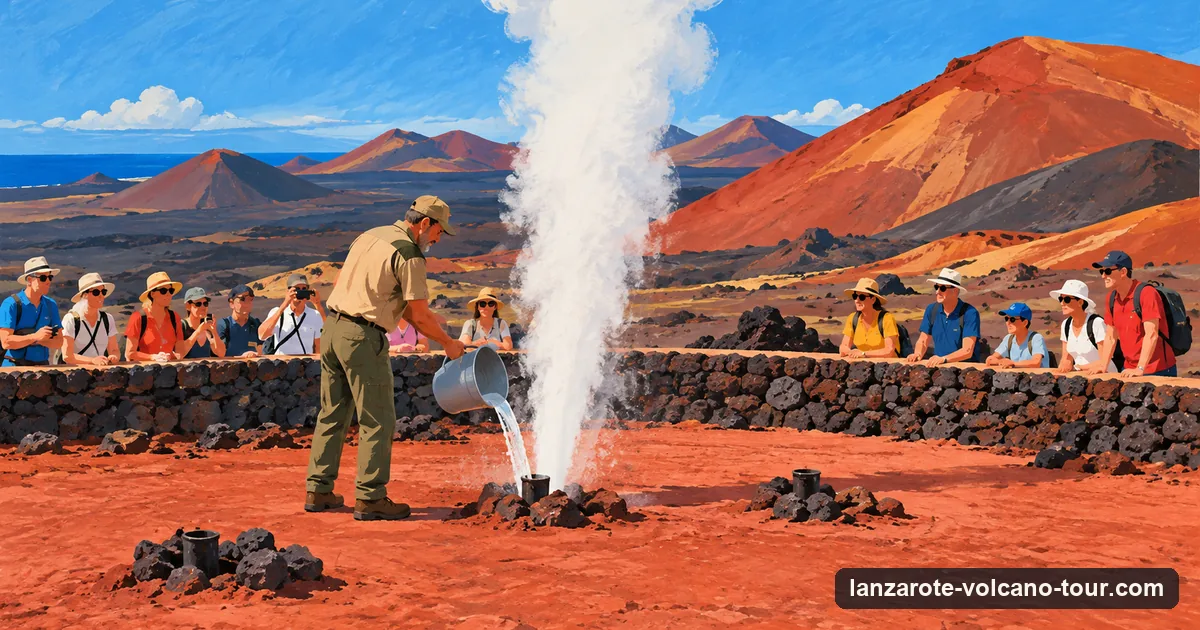
In the sense that matters to a visitor, the ground is still hot. At Islote de Hilario the guides pour water into a pipe sunk in the ground and it comes straight back up as steam; they push dry brush into a hollow and it catches fire. The El Diablo restaurant next door grills over a pit heated by the same ground. All of the tours that go into the park stop for these demonstrations.
Could Lanzarote erupt again?
Volcanologists treat the Canary Islands as volcanically active, and the last eruption in the archipelago was on La Palma in 2021, not on Lanzarote. Spain’s national geographic institute monitors the islands’ seismic activity and publishes it. Nothing here suggests a visitor needs to plan around an eruption: the island has been quiet for two centuries, and the coach tours run every day.
Where to see the volcanoes
| Where | What you see | How |
|---|---|---|
| Montañas del Fuego, Timanfaya | The 1730s craters, the coach route, the heat demonstrations | Timanfaya half day, from US$66 |
| Los Volcanes natural park | The same lava fields, on foot | 9 km guided hike, from US$49 |
| Cueva de los Verdes | A lava tube from the older Corona volcano in the north | Timanfaya, Jameos and Cueva day, from US$100 |
| El Golfo | A half-sunken crater with a green lagoon | Timanfaya and Jameos day, from US$98 |
| La Geria | Vines planted in pits of volcanic ash | Timanfaya and La Geria, from US$71 |
Prices as listed on GetYourGuide in October 2026.
The volcanoes in the north are much older than Timanfaya. Cueva de los Verdes is a lava tube formed by the Corona volcano, which the listing for Low Cost Tours Europe’s Timanfaya, Jameos and Cueva day describes as one of the world’s longest, with caverns up to 40 metres high running out under the sea. Jameos del Agua is part of the same tube, turned by César Manrique into a garden, a pool and a concert hall.
At night
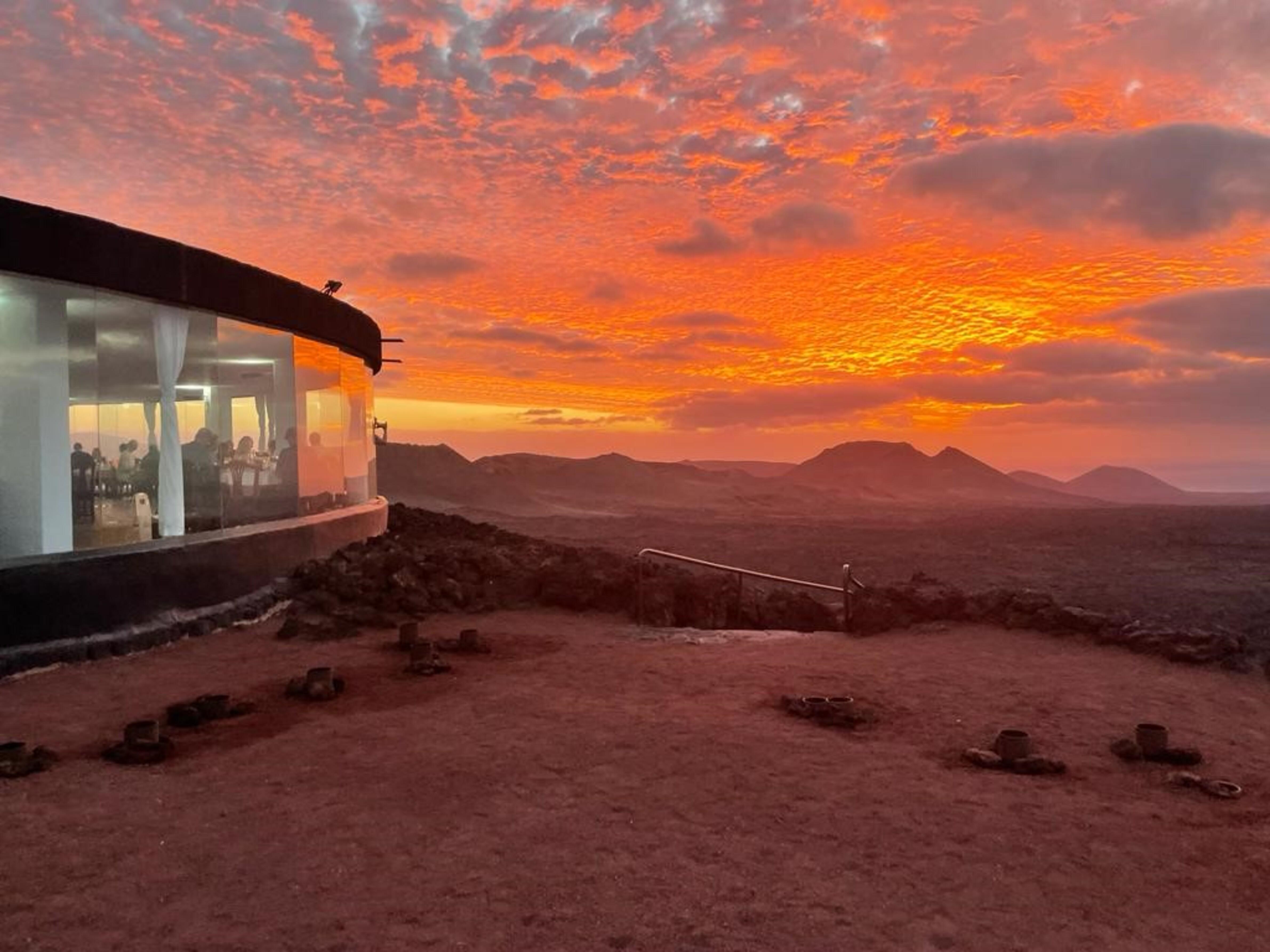
The evening tour this page puts first is the only way to be in Timanfaya after closing time: the volcano route, the demonstrations and a three-course dinner cooked over the volcano’s heat, with live music, from US$150. It suits a special evening more than a first look; for that, a half or full day shows more in daylight.
The Volcano After Dark, With Dinner
MTS Incoming's evening tour enters Timanfaya after the regular visitors have gone: the volcano route and the geothermal demonstrations with an official guide, then a three-course dinner cooked over the heat of the volcano, with wine or soft drinks and live music, and pickup from the resorts. Rated 4.5 from more than 300 reviews, from US$150 a person as of October 2026, with free cancellation up to 24 hours before.
Check Evening Tour Dates